
Field Notes on a Quiet Workhorse: Rhodiola Rosea Extract Salisorosides Rosavins Plant Extract Dietary Supplement
I’ve toured more than a few extraction lines, and—odd as it sounds—Rhodiola always smells like determination. The industry has shifted from folklore to lab-verified actives, and this extract sits right in that sweet spot: clean specs, measurable markers, and realistic claims. If you need an adaptogen that behaves on the bench and in scale-up, this one keeps showing up in winning formulas.
What it is (and isn’t)
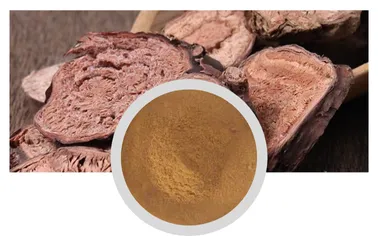
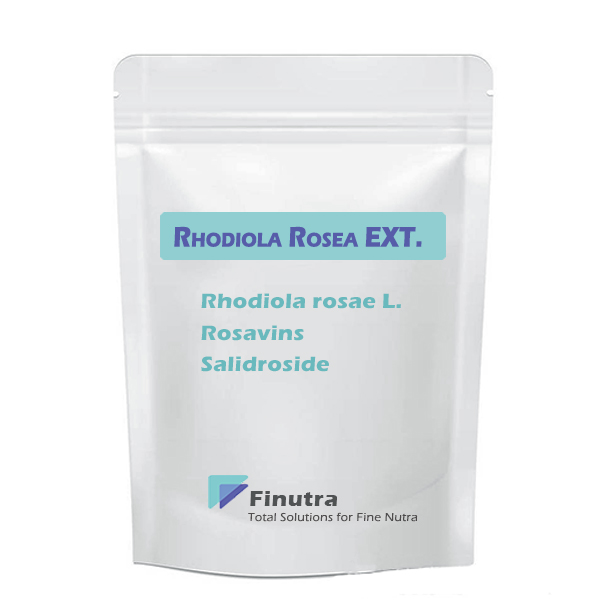
Rhodiola Rosea Extract Salisorosides Rosavins Plant Extract Dietary Supplement is standardized from Rhodiola rosea L., with the usual hero actives: salidroside and rosavins. It’s not a miracle cure—let’s be honest—but formulators use it to support stress resilience and focus in a way that’s measurable and, importantly, repeatable. Many customers say it “feels clean,” which is fuzzy, sure, yet tends to correlate with low excipients and tight QC.
Technical specifications
| Parameter | Spec (typical) | Method / Notes |
|---|---|---|
| Active options | Salidroside 3% or 12%; Rosavins 3% & Salidroside 1%; Rosavins 5% & Salidroside 2% | HPLC (USP/Ph. Eur. aligned) |
| Extraction solvent | Food-grade ethanol/water | Residue per USP / |
| Moisture | ≤5% | LOD |
| Particle size | 95% through 80 mesh ≈ | Real-world use may vary |
| Heavy metals | Pb, Cd, As, Hg ≤ USP limits | ICP-MS (USP /) |
| Microbiology | TPC ≤ 1,000 cfu/g; Yeast/Mold ≤ 100 cfu/g | USP / |
| Shelf life | 24 months, cool & dry | Nitrogen-packed optional |
Process flow (short version)
Botanical sourcing (Hebei-based network) → Identity check (macroscopy, TLC) → Water-ethanol extraction → Clarification → Macroporous resin purification → Concentration → Spray-dry → Milling → HPLC assay → Micro & metals → Release. Factory node: Building 23B1, No.2 Yuanboyuan St., Zhengding Area of China (Hebei) Pilot Free Trade Zone.
Where it shows up
- Nootropic capsules; focus and “calm energy” blends
- Electrolyte drinks and shots (low bitterness at sane doses)
- Pre-workout and endurance formulas (rosavins-forward SKUs)
- Gummies and stick packs—surprisingly stable when water activity is controlled
- Beauty-from-within and adaptogen teas
Real batch snapshot
Batch FRR-2408: Salidroside 12.3%, Rosavins 3.1%; Moisture 3.5%; Pb <0.5 ppm; TPC 320 cfu/g; Yeast/Mold 40 cfu/g; Aflatoxins B1,B2,G1,G2 <4 ppb total. Labs used HPLC-DAD and ICP-MS. Honestly, boring results (that’s good).
Vendor comparison (what buyers actually ask)
| Vendor | Certifications | Traceability | MOQ / Lead Time | Customization |
|---|---|---|---|---|
| Finutra (Hebei) | ISO 9001, ISO 22000, cGMP, Halal, Kosher | Farm-to-batch CoA, HPLC chromatograms | 25 kg / ≈10–15 days | Custom titers, granulation, blend-ready |
| Vendor B (EU) | FSSC 22000, Organic (select lots) | Lot-level trace; partial farm data | 5 kg / 3–4 weeks | Limited titers; no granulation |
| Vendor C (US) | cGMP, NSF GMP | Standard CoA; 3rd-party optional | 10 kg / 2–3 weeks | Flavor masking only |
Customization and formulation tips
- Pick ratios by use-case: focus blends lean to higher salidroside; endurance SKUs often prefer rosavins 5%.
- Granulation reduces dusting and improves compressibility in tablets.
- For beverages, aim pH 3.2–3.8; add polyphenol-friendly clarifiers if clarity matters.
Two quick case notes
A mid-size EU beverage brand swapped to Rhodiola Rosea Extract Salisorosides Rosavins Plant Extract Dietary Supplement at salidroside 3%—stability held for 12 months at 25°C/60% RH (no haze, actives >95% label claim). A US gummy maker chose rosavins 3% & salidroside 1%—customers reported “steady energy” in post-launch surveys. Not lab-grade evidence, sure, but consistent with the literature trend.
Regulatory note: use only as a dietary ingredient; avoid disease claims on pack; align testing with USP, ISO and local rules.
Authoritative references
- European Medicines Agency (EMA). Community herbal monograph on Rhodiola rosea L., rhizome and root (EMA/HMPC/232091/2011).
- USP Herbal Medicines Compendium. Rhodiola rosea monograph; USP General Chapters <232>, <233>, <61>, <62>.
- ISO 22000:2018. Food safety management systems—Requirements for any organization in the food chain.
- AOAC/ICP-MS methods for elemental impurities; industry alignment with ICH Q3D limits.
Post time:Oct - 16 - 2025