

Inside the supply chain: brain-friendly soy phospholipids that actually scale
If you formulate cognitive support products, you’ve probably priced and tested Phosphatidylserine Soybean Extract Powder 50% Nootropics Herbal Extract Raw Material more than once. Demand is rising across gummies, sachets, and clean-label capsules—yet consistency and real documentation still separate premium suppliers from the pack, to be honest.
Why PS 50% is trending now
Cognitive wellness is going mainstream. Brands are dialing in science-backed actives at efficacious doses (100–300 mg/day in many finished formulas), pushing for verified assays, non-GMO inputs, and clean extraction. It seems that PS 50% hits a sweet spot: high potency, decent flow, and better stability with proper packaging. Many customers say it plays nicely with L-theanine, citicoline, and DHA—surprisingly versatile.
Technical snapshot
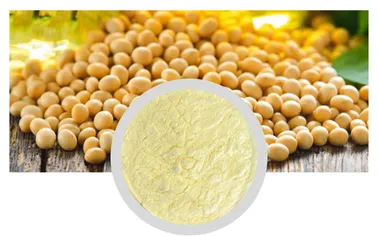
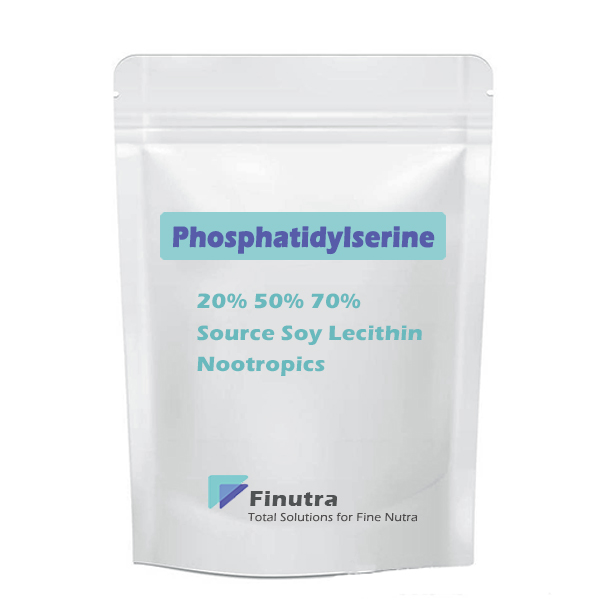
Phosphatidylserine Soybean Extract Powder 50% Nootropics Herbal Extract Raw Material is derived from soy lecithin (ethanol extraction), manufactured at Building 23B1, No.2 Yuanboyuan St., Zhengding Area of China (Hebei) Pilot Free Trade Zone. Non-GMO, BSE/TSE Free, Non Irradiation, Allergen Free.
| Parameter | Specification (≈/around) | Method/Ref |
|---|---|---|
| Assay (Phosphatidylserine) | ≥ 50.0% w/w | HPLC-ELSD |
| Source / Used Part | Soy lecithin / Fruit (label claim) | Traceability docs |
| Extract solvent | Ethanol (Class 3) | ICH Q3C |
| Heavy metals | Pb ≤ 1.0 ppm; Cd ≤ 0.5 ppm; As ≤ 1.0 ppm; Hg ≤ 0.1 ppm | USP <232>/<233> |
| Microbiology | TAMC ≤ 1×10^4 CFU/g; TYMC ≤ 1×10^3 CFU/g; Pathogens: absent | USP <61>/<62> |
| Shelf life | 24 months sealed, ≤25°C, dry, nitrogen-flushed, away from light | Real-world use may vary |
Process flow (simplified)
Materials: food-grade soy lecithin, ethanol, L-serine (enzymatic step), inert gas. Methods: ethanol extraction → enzymatic transphosphatidylation → low-temp vacuum concentration → membrane filtration → deodorization → spray drying → sieving (40–80 mesh) → nitrogen flush and pack. Testing standards: assay by HPLC; residual solvents per ICH Q3C; elemental impurities per USP /; pesticides per USP ; oxidation (peroxide value) per AOCS. Industries served: dietary supplements, functional foods, RTD sachets, softgels, and gummies.
Application scenarios
- Capsules: 100–150 mg PS/cap, 1–2× daily.
- Gummies: flavor-masked; watch peroxide/acid values; add antioxidants.
- Powder sticks: pair with B-vitamins, theanine; humidity control is key.
- Softgels: common with soy/sunflower carriers for improved dispersion.
Vendor landscape (quick reality check)
| Criteria | Finutra (origin) | Vendor B (spot) | Vendor C (OEM broker) |
|---|---|---|---|
| Assay consistency | ≈ 50–54% lot-to-lot | ≈ 47–52% | Varies (rebadged) |
| Docs & certificates | COA, SDS, allergen, GMO, Halal/Kosher | COA basic | On request |
| Lead time | Stock or 7–15 days | Uncertain | Depends on partner |
| Custom options | Mesh size, carrier profile, private-label COA | Limited | Case by case |
Customization and packaging
Options include tighter assay windows, 40–80 mesh, antioxidant systems (mixed tocopherols), and small-batch nitrogen-flushed 1–5 kg foil bags inside fiber drums. I guess the practical win is fewer surprises at scale-up.
Field notes (mini case studies)
- US DTC brand reformulated a memory gummy: switched to Phosphatidylserine Soybean Extract Powder 50% Nootropics Herbal Extract Raw Material, added rosemary extract for stability—returns dropped ≈18% over 2 quarters due to better taste stability.
- EU private label launched sachets (200 mg PS/day): with nitrogen-packed powder, retained ≥98% assay at 6 months, 25°C/60% RH (in-house ICH-like study).
Compliance and testing
Typical batch data: residual ethanol ≤ 5000 ppm; peroxide value ≤ 10 meq/kg; acid value ≤ 6 mg KOH/g; allergens: soy derivatives declared; GMO-negative by PCR screen. Labs operate to ISO/IEC 17025. Certifications available on request: Halal, Kosher, HACCP, GMP.
References
- ICH Q3C (R8) Impurities: Guideline for Residual Solvents.
- USP General Chapters <232> and <233> Elemental Impurities.
- USP <61>/<62> Microbiological Examination of Nonsterile Products.
- EFSA Journal 2011;9(6):2292, scientific opinion on phosphatidylserine and cognitive function.
- AOCS Official Methods Ca 5a-40 (Peroxide Value) and Cd 3d-63 (Acid Value).
Post time:Oct - 07 - 2025