

Phosphatidylserine for smarter formulations: field notes from the supply chain
I’ve spent enough time in formulation rooms to know when an ingredient just “behaves.” Phosphatidylserine Soybean Extract Powder 50% Nootropics Herbal Extract Raw Material is one of those steady performers—clean sourcing, predictable HPLC data, easy to blend. Origin-wise, it’s shipped from Building 23B1, No.2 Yuanboyuan St., Zhengding Area of China (Hebei) Pilot Free Trade Zone. The lot files I’ve seen read like you want them to: Non-GMO, BSE/TSE-free, non-irradiated, allergen-free.
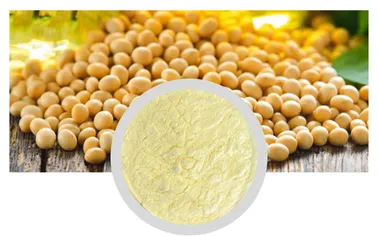
Why PS 50% is trending (and where it actually fits)
Cognitive support is still hot—particularly nootropics for knowledge workers, esports, and “focus” blends for students. Brands ask for consistent 50% PS because it plays nicely with choline sources, L-theanine, and bacopa in capsules, sachets, and functional beverages. To be honest, it’s also about trust: many customers say PS is a “feelable” ingredient, even though claims are tightly regulated in the US and EU.
How it’s made (real-world process flow)
- Materials: food-grade soy lecithin (non-GMO), L-serine, food ethanol (Class 3 solvent)
- Method: enzymatic transphosphatidylation (phospholipase D) to enrich phosphatidylserine; ethanol extraction; concentration; deodorization
- Finishing: spray-drying onto a suitable carrier to achieve ≈50% PS; sieving; metal detection
- Testing: assay by HPLC per USP -style chromatography; residual solvents to ICH Q3C(R8); heavy metals per modern ICP-MS limits; microbial per dietary supplement specs
- Service life: around 24 months sealed, cool and dry; PS is oxidation-sensitive—nitrogen-flushed bags help
- Industries: dietary supplements, functional foods, ready-to-mix nootropics, and even premium skincare (phospholipid systems)
Key specifications (typical COA targets)
| Item | Spec (≈, real-world use may vary) |
|---|---|
| Assay (Phosphatidylserine, HPLC) | ≥ 50% |
| Source / Used Part | Soy lecithin / Fruit listed per vendor data |
| Extract Solvent | Ethanol (Class 3), ICH Q3C limit ≤ 5000 ppm |
| Heavy Metals (Pb/Cd/As/Hg) | Meets modern limits (e.g., USP/ICH-aligned) |
| Microbial Limits | TPC, yeast/mold within dietary supplement specs |
| Certifications | Non-GMO, BSE/TSE-free, Non-irradiation, Allergen-free; ISO/FSSC available on request |
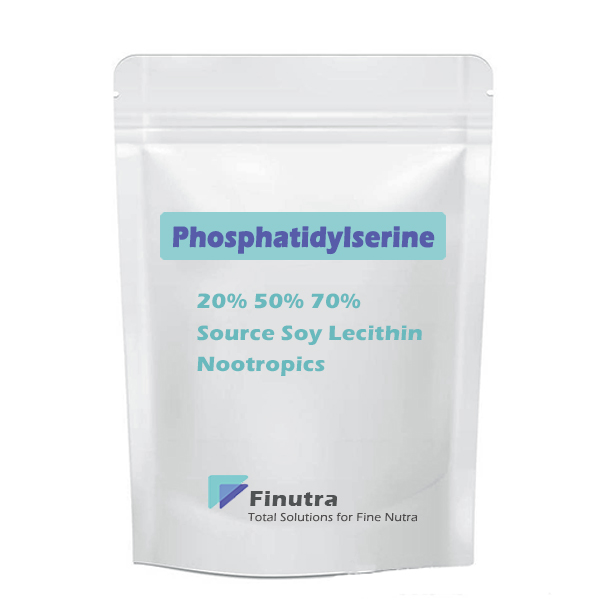
Vendor comparison at a glance
| Factor | Phosphatidylserine Soybean Extract Powder 50% Nootropics Herbal Extract Raw Material | Typical Trader | Local Mill |
|---|---|---|---|
| Assay consistency | Tight, HPLC-verified batches | Varies lot-to-lot | Good, limited scale |
| Regulatory files | Complete CoA, MSDS, MoA, allergen | Basic CoA only | Partial |
| Lead time | Stocked SKUs; predictable | Uncertain | Short, small runs |
Customization and formulation notes
- Options: carrier system, particle size, flow aids for tableting, flavored premixes
- Compatibility: pairs well with bacopa, ginkgo, L-tyrosine; avoid high heat and moisture
- Labeling: “Phosphatidylserine (from soy lecithin)”—check regional regs; claims must follow local rules
Mini case studies
Case A (capsule): A US brand swapped a 20% PS for Phosphatidylserine Soybean Extract Powder 50% Nootropics Herbal Extract Raw Material and cut fill weights by ≈30%, improving capsule closure and yield. Customer feedback: “cleaner focus stack” and fewer soft capsules required per serving.
Case B (stick packs): An APAC beverage startup used 50% PS with natural flavors. Stability at 40°C/75% RH hit 24 weeks with nitrogen flushing—assay held within ±5% (accelerated), which surprised the team given PS’s sensitivity.
Standards and test methods we align to
- Safety: PS (soy) recognized via FDA GRAS notice framework [1]
- Residual solvents: ICH Q3C(R8) (ethanol Class 3) [2]
- HPLC: USP General Chapter <621> for chromatography conditions [3]
- Phospholipids profiling: AOCS methods (e.g., Ja 7-95) [4]
References:
1. FDA GRAS Notice Inventory (Phosphatidylserine from soybean, industry references): https://www.fda.gov/food/generally-recognized-safe-gras-gras/gras-notice-inventory
2. ICH Q3C(R8) Residual Solvents: https://database.ich.org/sites/default/files/Q3C-R8_Guideline_Step4_2021_0412.pdf
3. USP General Chapter <621> Chromatography: https://www.uspnf.com/notices/general-chapter-621-chromatography
4. AOCS Official Methods for Phospholipids (e.g., Ja 7-95): https://www.aocs.org/attain-lab-services/methods/methods/search
Post time:Oct - 20 - 2025