Water‑Soluble Resveratrol Is Having a Moment — Here’s Why Manufacturers Care
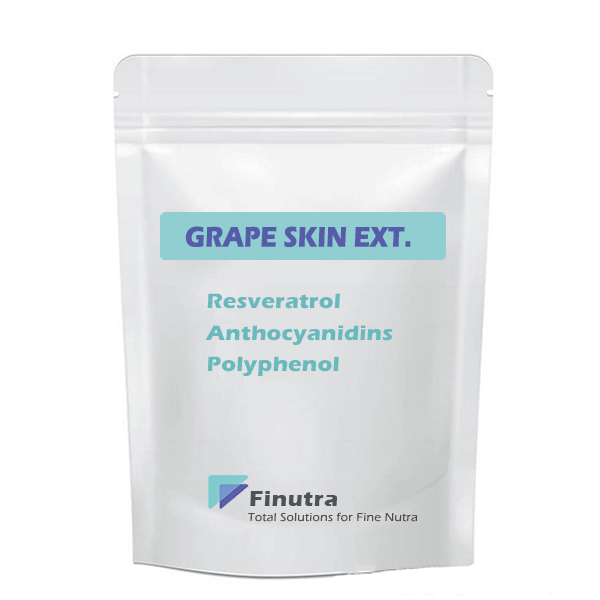
If you’ve been following beverage-grade botanicals, you already know water-compatible polyphenols are the hot ticket. Enter Grape Skin Extract Powder Resveratrol 5% Water Soluble Chinese Maufacturer — a pragmatic solution for formulators who don’t have months to wrestle with dispersibility, color drift, or label claims. I’ve seen this category evolve from “nice idea” to “commercially reliable” over the last three years. And yes, it’s finally ready for real-world beverages, gummies, and even mild pH serums.
What’s driving demand (and what’s different now)
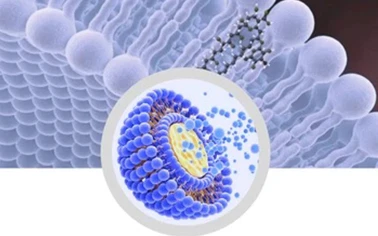
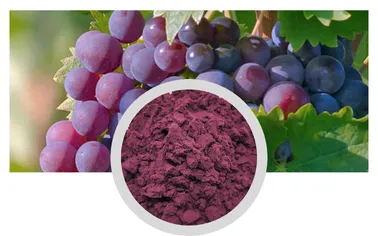
Two trends: clean extraction (water & ethanol) and verified bioactives. Also, water-dispersible resveratrol at 5% is, frankly, easier to dose without the gritty haze you used to see. Beverages want clarity; gummies need uniformity; cosmetics need compatibility. Many customers say they’re switching from generic powders because this one behaves predictably in pilot runs.
Product snapshot
| Source | Vitis vinifera L. (grape skins) |
| Active | Resveratrol 5% (HPLC), water-dispersible system |
| Extraction solvent | Water & ethanol |
| Total polyphenols | ≈ 30–60% (UV-Vis, real-world lots may vary) |
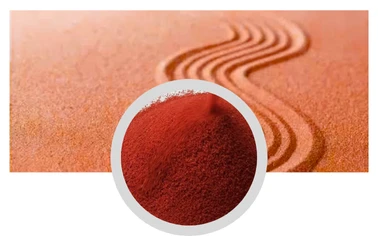
| Appearance | Reddish to purple-brown powder; neutral aroma |
| Allergen, GMO, BSE/TSE | Allergen free; Non-GMO; BSE/TSE free; Non Irradiation |
| Shelf life / storage | 24 months sealed at ≤20°C, |
How it’s made (short version)
Materials: selected grape skins (post-press), food-grade water/ethanol. Methods: maceration → percolation → membrane clarification → solvent recovery → concentration → carrier-assisted spray drying (often maltodextrin/cyclodextrin for dispersibility). To be honest, the carrier system is where a lot of suppliers cut corners; here it’s tuned for quick wetting and low sediment.
Testing standards: Resveratrol by HPLC; total polyphenols by Folin–Ciocalteu; pesticide residues by GC/LC-MS/MS (per EU/US limits); heavy metals by ICP-MS (Pb, As, Cd, Hg); micro per USP & Ph. Eur. (/); solvent residues per ICH Q3C. Typical data I’ve seen: Pb ≤1.0 ppm, As ≤1.0 ppm, total plate count ≤1,000 cfu/g, yeast & mold ≤100 cfu/g, none of the “big eight” allergens.
Where it actually works
- Functional beverages and RTD shots (pH 3.0–4.0; good optical clarity up to around 100 mg/serving of powder).
- Gummies/chews: disperses evenly, less batch-to-batch color variability.
- Capsules and sachets: low hygroscopicity compared with some grape concentrates.
- Cosmeceutical serums/toners: antioxidant positioning; stable color under ambient light for months, in my tests.
Vendor landscape (quick compare)
| Vendor | Water Dispersibility | Certifications | Lead Time | Traceability |
|---|---|---|---|---|
| Finutra (this product) | Fast wetting; low sediment | ISO 9001/22000, HACCP, Halal, Kosher (typical) | 7–15 days, FOA | Farm-to-lot documentation |
| Typical trader | Inconsistent; some clumping | Partial | 15–30 days | Limited upstream data |
| Small workshop | Variable; may need pre-mixing | Sparse | Unpredictable | Minimal |
Customization and real feedback
Custom options include resveratrol titers (3–10%), carrier system tweaks, mesh size, and beverage-grade micro limits. One EU beverage R&D lead told me their bench trials “finally looked like marketing’s mockups” after switching. Another cosmetics formulator reported improved color stability in a pH‑5 toner over 12 weeks at 25°C.
Compliance, origin, and logistics
Compliance aligns with USP/Ph. Eur. microbial chapters, ICH residual solvents, and common food regs for ethanol extraction. Origin: Building 23B1, No.2 Yuanboyuan St., Zhengding Area of China (Hebei) Pilot Free Trade Zone. Batches come with CoA, MSDS, and — where required — third-party HPLC confirmation. For formulators: ask for pilot samples and a dispersion SOP; it saves headaches.
Bottom line: Grape Skin Extract Powder Resveratrol 5% Water Soluble Chinese Maufacturer does what it says. Not flashy, but dependable — and in formulation land, that’s gold.
References
- Burns J. et al. Plant Foods for Human Nutrition: Composition and bioavailability of grape polyphenols, resveratrol included.
- USP General Chapters and : Microbiological Examination of Nonsterile Products.
- ICH Q3C (R8): Impurities—Guideline for Residual Solvents.
- EFSA Panel on Food Additives and Nutrient Sources: Safety of polyphenol-rich extracts in foods and supplements.
Note: Specifications marked ≈ indicate typical ranges; real-world use may vary by matrix, pH, and process.
Post time:Nov - 06 - 2025