
Inside China’s High-Purity Grape Seed Extract: What Buyers Really Want to Know
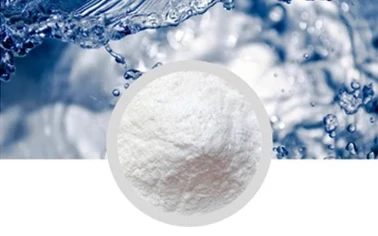
If you source botanical actives, you already know the heat around polyphenols isn’t fading. I recently visited suppliers in Hebei and, to be honest, was impressed by how far quality control has come. Here’s a grounded take on Grape Seed Extract Powder Proanthocyanidins Polyphenols Chinese Factory High Purity—from tech specs to real-world use and how to vet a vendor without getting lost in buzzwords.
Industry snapshot
Demand is fueled by “beauty-from-within,” sports recovery, and clean-label fortification. Brands want verified OPC (oligomeric proanthocyanidins), low solvents, and stable color/solubility. Interestingly, beverage formulators are asking for better clarity at lower pH; cosmetics teams want smaller particle sizes for smoother dispersion. It seems the winning combo is ethanol–water extraction plus tight microbial control.
Product tech specs
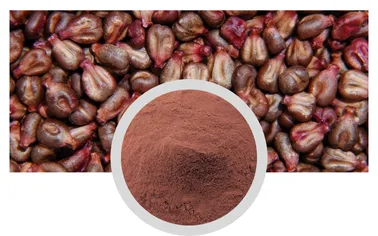
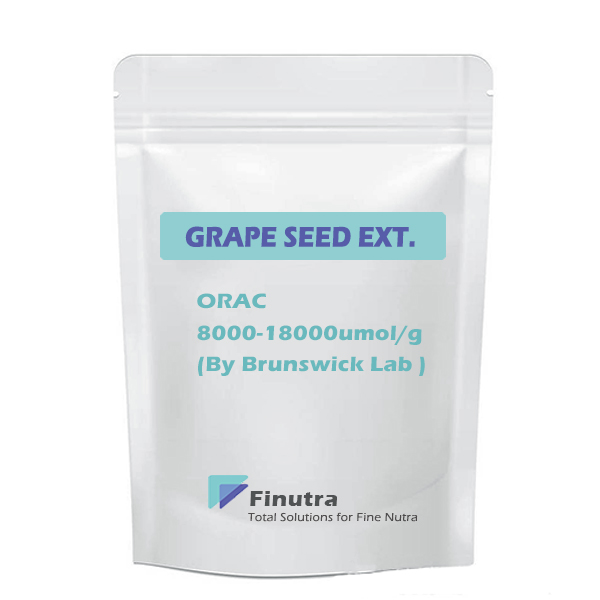
| Name | Grape Seed Extract Powder Proanthocyanidins Polyphenols Chinese Factory High Purity |
| Source / Part | Vitis vinifera L., seeds |
| Extraction solvent | Water & Ethanol (food grade) |
| OPC (DMAC method) | 95% ≈ typical, batch data 95.4% (real-world use may vary) |
| Total polyphenols | ≥ 80% (Folin–Ciocalteu, gallic acid eq.) |
| Mesh size | 95% pass 80 mesh |
| Loss on drying | ≤ 5.0% |
| Heavy metals | Meets USP <232> (Pb < 0.5 ppm, As < 0.5 ppm, Cd < 0.3 ppm, Hg < 0.1 ppm) |
| Microbiology | TPC ≤ 1,000 cfu/g; Yeast/Mold ≤ 100 cfu/g; Pathogens: absent |
| Certs & claims | Non-GMO, BSE/TSE-free, Non-irradiation, Allergen-free; ISO22000/HACCP |
| Packaging / service life | 25 kg/drum with liners; shelf life 24 months sealed, cool & dry |
| Origin | Building 23B1, No.2 Yuanboyuan St., Zhengding Area of China (Hebei) Pilot Free Trade Zone |
Process flow (how it’s actually made)
Materials: cleaned Vitis vinifera seeds from vetted wineries → ethanol–water extraction → filtration → membrane ultrafiltration → vacuum concentration → spray drying → milling/sieving → blending → QC release. Methods: OPC by DMAC; polyphenols by Folin–Ciocalteu; residual solvents by GC; pesticides per USP ; micro by USP /. To be honest, membrane steps make a big difference in clarity and off-taste.
Applications (and what formulators ask)
- Capsules/tablets: 50–300 mg/serving is common; many customers say 100 mg OPC 95% hits a sweet spot.
- Functional beverages: clarify at pH 3–4; trial at 0.02–0.05% for color and polyphenol lift.
- Cosmeceuticals: antioxidant serums, masks; finer mesh requested for stable dispersions.
- Bakery/bars & pet nutrition: color stability and taste masking matter more than you think.
Vendor comparison (quick reality check)
| Factor | This factory | Generic trader | EU brand |
|---|---|---|---|
| OPC consistency | ≈95% ±1% | ≈90% ±5% | ≈95% ±1% |
| Traceability | Full lot docs, winery sourcing | Partial | Full |
| MOQ / lead time | 25 kg / 7–10 days | 50 kg / 14–21 days | 25 kg / 10–15 days |
| Third‑party testing | ISO/IEC 17025 labs | On request | Standard |
| Customization | OPC 60–98%, mesh, carriers | Limited | Moderate |
Customization and QC
Options: OPC 60/80/90/95/98%; polyphenols ≥70–90%; micro-reduced lots; beverage-grade clarity; custom carriers (Maltodextrin-free if needed). Testing includes DMAC for OPC, Folin for total phenolics, GC for residual ethanol (<5000 ppm), and full pesticide screens per USP . Surprisingly, some brands now request dioxin/PCB checks for EU launches—doable with the right lab.
Case notes and feedback
- US gummies brand: moved to Grape Seed Extract Powder Proanthocyanidins Polyphenols Chinese Factory High Purity at OPC 90% for better taste; report fewer clumping issues after switching to finer mesh.
- APAC beverage: 0.03% inclusion at pH 3.5 delivered color without haze; micro kept below 500 cfu/g post-fill. Many customers say lead times are predictable, which helps.
Bottom line: if you need verified OPC with clean processing and tight specs, Grape Seed Extract Powder Proanthocyanidins Polyphenols Chinese Factory High Purity is a practical, scalable choice—especially when documentation and third‑party testing are part of the deal.
References
- Singleton VL, Rossi JA. Colorimetry of total phenolics with phosphomolybdic–phosphotungstic reagents. Am J Enol Vitic. 1965.
- AOAC Official Method 2015.06: Determination of Total Procyanidins by DMAC.
- United States Pharmacopeia. General Chapter <561> Articles of Botanical Origin.
- ISO/IEC 17025:2017 – General requirements for the competence of testing and calibration laboratories.
Post time:Oct - 10 - 2025