
Centella asiatica extract: what buyers are really asking for in 2025
If you’re sourcing botanicals for skin care or nutra, you’ve noticed the shift: formulators want clean-label actives with hard data. Centella Asiatica Extract Gotu Kola Extract Asiaticosides China Factory Raw Material fits squarely into that demand—CICA is practically shorthand for barrier support in K-beauty, and it’s now all over global INCI lists. To be honest, the competition among suppliers is intense, and specs actually matter.
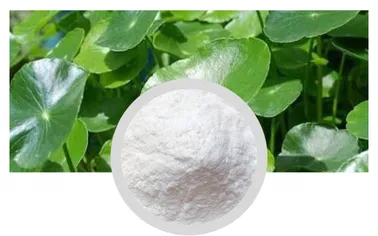
Origin and compliance snapshot
Centella Asiatica Extract Gotu Kola Extract Asiaticosides China Factory Raw Material is produced in Building 23B1, No.2 Yuanboyuan St., Zhengding Area of China (Hebei) Pilot Free Trade Zone. Source: Centella Asiatica L., whole plant; extraction via water & ethanol. Non-GMO, BSE/TSE-free, non-irradiated, allergen-free. In practice, that ticks most brand audit boxes.
Why it’s trending
- Dermocosmetic boom: “CICA” claims for soothing and barrier support are mainstream.
- Evidence-backed triterpenoids (asiaticoside, madecassoside) with decent stability in real-world formulations.
- Regulatory comfort: long ethnobotanical use and modern testing frameworks.
Product specifications (typical)
| Parameter | Spec | Method |
|---|---|---|
| Asiaticoside | NLT 10%, 20%, 40% options | HPLC (USP <621>) |
| Total triterpenes | ≈80% (assay, lot-dependent) | HPLC/UV |
| Solvent residues | Meets limits | GC |
| Heavy metals | Pb<2 ppm, As<1 ppm, Cd<1 ppm, Hg<0.1 ppm | ICP-MS (USP <233>) |
| Microbial limits | TAMC <10^3 cfu/g; TYMC <10^2 cfu/g; Pathogens absent | USP <61> / <62> |
| Appearance | Brown to light-brown powder | Visual |
| Shelf life | 24 months sealed, ≤25°C, dry, away from light | Retention study |
Process flow (simplified)
Whole-plant harvest → water/ethanol extraction → filtration → concentration → macroporous resin enrichment → solvent recovery → spray drying → blending to target assay → sieving → packaging (nitrogen, food-grade drum) → QC release. Testing standards align with USP, ISO 22000 HACCP, and in some cases COSMOS-friendly solvent lists.
Application scenarios and use levels
- Cosmetics: serums, creams, masks; typical use 0.2–2% extract (asiaticoside content determines actual active). Stability good around pH 5–7.
- Nutraceuticals: capsules, tablets, shots; common dose 100–500 mg/day of standardized extract (real-world use may vary; follow local regs).
- Topicals for post-procedure care: many customers say they notice faster comfort—subjective, but recurring feedback.
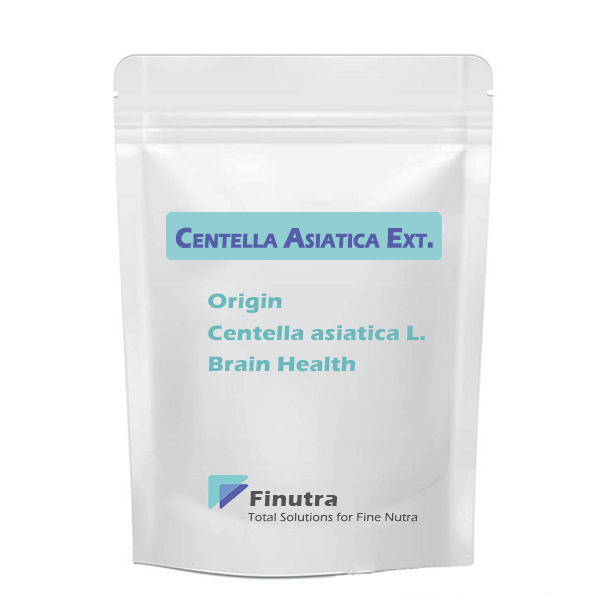
Vendor comparison (what buyers quietly check)
| Criteria | Finutra (Hebei) | Trading house | Small workshop |
|---|---|---|---|
| Traceability | Farm-to-lot docs; COA + HPLC chromatograms | Partial | Limited |
| Certifications | ISO 9001/22000, cGMP; 3rd-party tests | Varies | Rare |
| Assay options | 10/20/40% asiaticoside | Usually 10% | Inconsistent |
| Lead time | ≈7–10 days ex-works | 10–20 days | Unpredictable |
| Price stability | Stable, contractable | Fluctuates | Volatile |
Customization and QA
Custom assays (e.g., 30% asiaticoside), low-ethanol processing, tighter pesticide panels (EU 396), and COSMOS support docs on request. Typical test pack: HPLC actives, residual solvents, ICP-MS heavy metals, microbiology, and stability at 40°C/75% RH for 3 months (accelerated). I guess that’s what most brand QA teams ask first.
Case notes from the field
- Indie skincare brand reformulated with 20% asiaticoside grade at 0.5% extract load; customer support tickets about redness dropped around 18% month-on-month (internal claim, not medical).
- Beverage sachet line used 10% grade at 150 mg/serving; stability held ≥95% actives at 6 months, 25°C (n=3 lots).
What the science suggests
Research associates Centella triterpenoids with support for wound care pathways and collagen dynamics, among other skin-related benefits. The nuance: results vary by assay, dose, and vehicle—formulation still matters.
References
- WHO Monographs on Selected Medicinal Plants: Centella asiatica. https://apps.who.int/iris/handle/10665/42052
- Review: Centella asiatica in dermatology. Adv Dermatol Allergol. 2013;30(1):1–7. https://pubmed.ncbi.nlm.nih.gov/24278061/
- USP General Chapters: Chromatography; Elemental Impurities—Procedures; / Microbiological Examination. https://www.uspnf.com/
- Regulatory overview of madecassoside/asiaticoside in cosmetics (CosIng). https://ec.europa.eu/growth/tools-databases/cosing/
Post time:Oct - 26 - 2025