

Why formulators keep asking for Trans-Resveratrol 98% Powder Polygonum Cuspidatum Extract Skin Care Factory Supply
I’ve toured more than a few extraction facilities in the past decade, and—honestly—there are only a handful of actives that still get R&D teams properly excited. Trans-resveratrol is one of them. It’s clean, familiar to regulators, and increasingly backed by sensible stability data for topical use. In fact, when a product manager tells me they need fast-turn anti-oxidation support with real specs, I end up pointing to Trans-Resveratrol 98% Powder Polygonum Cuspidatum Extract Skin Care Factory Supply more often than not.
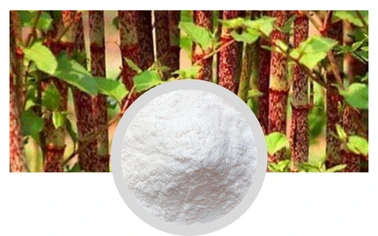
What’s trending in 2025
Formulators are moving from generic “polyphenol blends” to single-ingredient actives with traceable origin and quantifiable trans:cis ratios. Clean-label claims are expected, but so are defendable test methods (HPLC over UV, please). There’s also a nudge toward smaller particle sizes for serum clarity and better dispersion—practical details that separate a good lab day from an annoying one.
Quick spec snapshot
| Active | Trans-Resveratrol ≈98% (HPLC) |
| Botanical source | Polygonum cuspidatum (primary); Vitis vinifera L. (alternative) |
| Grades available | 2%, 5%, 10%, 50%, 98% (HPLC) |
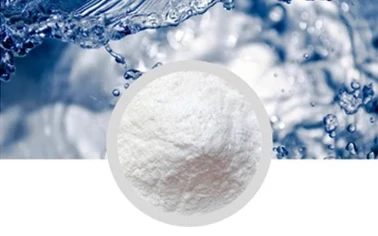
| Appearance / mesh | Off-white to white powder; 80–200 mesh options |
| Trans:cis ratio | ≥98:2 (typical, HPLC) |
| Residual solvents | Ethanol only; complies with ICH Q3C limits |
| Heavy metals / micro | Pb/Cd/Hg/As <10 ppm total (ICP-MS); TAMC <1,000 cfu/g; Yeast/Mold <100 cfu/g |
| Packaging / shelf life | 25 kg fiber drum; 24 months sealed, cool & dry |
| Origin | Building 23B1, No.2 Yuanboyuan St., Zhengding Area of China (Hebei) Pilot Free Trade Zone |
Process flow (how it’s made, briefly)
Materials: dried Polygonum cuspidatum root; food-grade ethanol; purified water. Methods: ethanol extraction → filtration → concentration → crystallization → solvent switch/polish → drying → milling/sieving → final HPLC assay. Testing standards: HPLC assay; ICP-MS for metals; microbiology per ISO methods; residual solvents per USP <467>. Real-world stability: most serums show good color hold 3–6 months at room temp; airless packs perform best, which isn’t shocking.
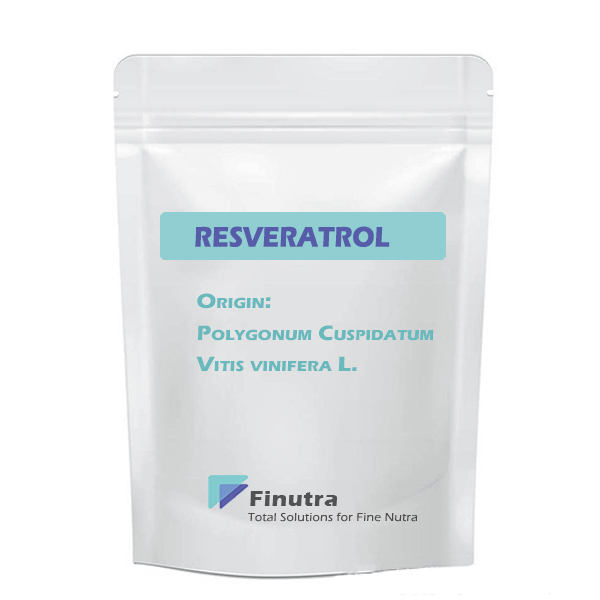
Where it fits
- Skin-care serums and boosters (1,000–5,000 ppm active, formulas vary)
- Anti-aging creams with vitamin C or ferulic acid synergy
- Sun-care aftercare gels (calming/antioxidant positioning)
- Nutricosmetics and premium nutraceuticals (labeling differs by market)
Many customers say the dispersion is easier when pre-slurried in propanediol or ethanol, which matches our lab notes. And yes, it can tint slightly in high-pH systems—buffering helps.
Why this factory supply stands out
- Consistent HPLC purity with batch CoAs back to the farm lot
- ISO 9001, ISO 22000, HACCP; Kosher/Halal available
- Customization: mesh size, granulation for tablets, low-odor polish, clean-label solvent path
- Lead time: usually 5–10 business days ex-warehouse (seasonality can nudge this)
Vendor comparison (real-world)
| Criteria | Finutra (Factory) | Trader A | Small Mill B |
|---|---|---|---|
| Purity (HPLC) | ≈98–99% | ≈95–98% | ≈90–96% |
| Trans:cis control | ≥98:2 typical | Not always specified | Varies by lot |
| Traceability | Full farm-to-drum | Partial | Limited |
| Regulatory docs | CoA, SDS, TDS, IFRA note on request | CoA only | CoA (basic) |
Test data (typical lot)
HPLC assay: 98.5% trans-resveratrol; trans:cis 99:1; metals total <5 ppm; residual ethanol 1,200 ppm; TAMC 100 cfu/g; Yeast/Mold <10 cfu/g; PAHs meet EU cosmetic guidance. Real-world use may vary, but these numbers are steady across recent batches.
Case notes from the field
A mid-size EU skin-care brand swapped to Trans-Resveratrol 98% Powder Polygonum Cuspidatum Extract Skin Care Factory Supply for a C+Resveratrol daytime serum. Color stability improved in airless packs; claim support got clearer thanks to HPLC data. Another client used the 10% grade in gummies (interesting choice), reporting better flavor neutrality after a granulation tweak.
Standards and compliance
- Manufactured under ISO 22716-aligned cosmetic GMP and ISO 9001 systems
- Testing references: USP <467> residual solvents; ICP-MS metals; ISO microbiology
- Ingredient listing per EU CosIng; safety positioning informed by EFSA assessments (for ingestible forms)
Citations
- PubChem. Resveratrol (trans-). NIH Database.
- EFSA Journal. Safety of trans-resveratrol as a novel food (2016, updates as applicable).
- ISO 22716: Cosmetics—Good Manufacturing Practices (GMP).
- USP <467> Residual Solvents; USP General guidance for botanical articles.
- EU CosIng Database. Ingredient: Resveratrol.
Post time:Oct - 21 - 2025